Overview
Questions about green pool water causes come up often in Cape Coral and across Southwest Florida, where heat, rain, and long swim seasons shape pool care. This guide walks through signs, causes, and practical steps in plain language, with notes on when a provider visit makes sense for a specific pool.
What Green Water Actually Means
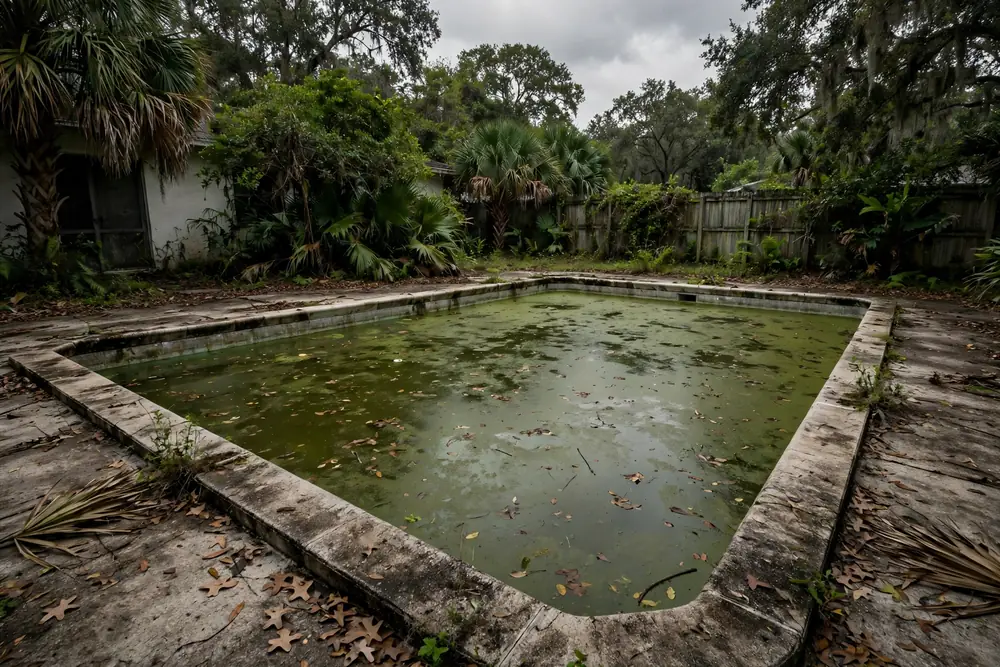
Green water signals algae growth that has outpaced sanitizer and filtration. Color ranges from a light teal haze to a dark swamp tone as algae load grows.
Algae spores arrive through wind, rain, and swim gear, and warm Florida water helps growth along. Clarity returns through a staged process rather than a single quick step. Homeowners often ask whether a green pool water causes concern can wait a week. Slow changes in clarity, pressure, or sound usually grow rather than shrink in warm Florida water, and an early call keeps options wider, from a focused fix to a staged plan across a few visits.
The Most Common Causes
Low sanitizer after heat, sun, or heavy swim load tops the list across Southwest Florida. Rain dilutes balance and feeds algae with organic material washed from roofs and yards.
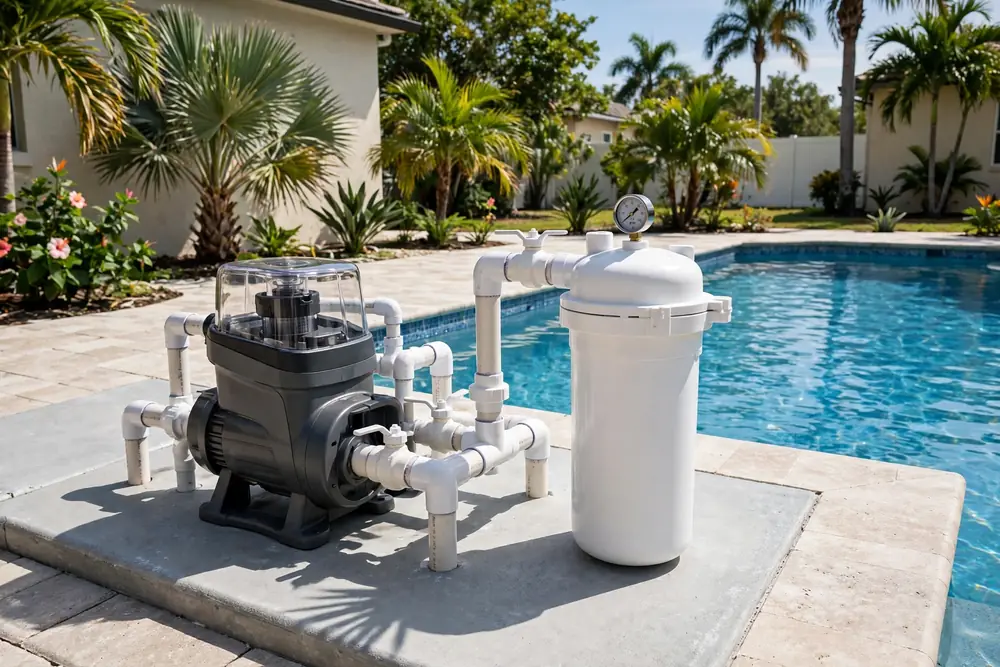
A loaded filter or a pump problem cuts circulation and lets algae settle. A scaled salt cell can produce too little sanitizer while readings look close to normal. A green pool water causes visit also protects the rest of the pool system. Circulation, filtration, and water balance lean on each other, and a fault in one corner quietly adds strain elsewhere, so a provider checks connected parts rather than a single symptom in isolation during a visit.
Cape Coral heat raises water temperature for long stretches of the year, and warm water uses sanitizer faster than cool water. A pool that looks clear on Monday can turn dull by Friday after heavy swim use, a storm, or a missed brushing cycle along walls and steps.
Summer rain adds fresh water, leaf matter, and roof runoff to many Cape Coral pools, and each storm can shift balance readings for days. Checking water soon after rain, clearing baskets, and watching filter pressure helps a small change stay small instead of growing into a bigger visit.
Screened enclosures around many Southwest Florida pools cut leaf load but still collect fine dust, pollen, and insects along the waterline. Tile lines, steps, and corners collect buildup first, and regular attention to those spots keeps the rest of a cleaning or repair visit focused.
Canal-front homes in Cape Coral often face extra wind-blown debris and salt air near pool equipment pads. Metal fittings, pump housings, and heater parts age faster in salty air, so a provider visit often includes a quick look at the pad even when the call starts with water clarity.
Hurricane season planning matters for every pool in Southwest Florida, from water level choices before a storm to debris removal after wind passes. Notes about equipment age, prior repairs, and storm exposure help a provider plan a visit with the right parts and a realistic schedule.
Salt systems remain popular across Cape Coral, and salt cells need periodic inspection for scale buildup as water temperature and run time change. A cell with heavy scale produces less sanitizer, and water can slide toward green even when the salt reading looks normal at a glance.
- Heat and long sunny days
- Storm runoff and debris
- Missed brushing or cleaning cycle
- Filter or pump trouble
- Salt cell scale
First Checks Before Treatment
A water test at the start sets the order of every later step. Pump and filter function need a check, since treatment without circulation stalls fast.
Loose debris comes out early so later stages work on algae rather than leaves. Photos from the deck help a provider judge load and plan visit stages. Clear notes help every green pool water causes visit in Cape Coral. Water color, recent weather, equipment sounds, and the date of the last filter cleaning each point toward a likely cause, and a short list shared during a call lets a provider plan checks, parts, and timing before arriving at the pool.
How a Cleanup Usually Proceeds
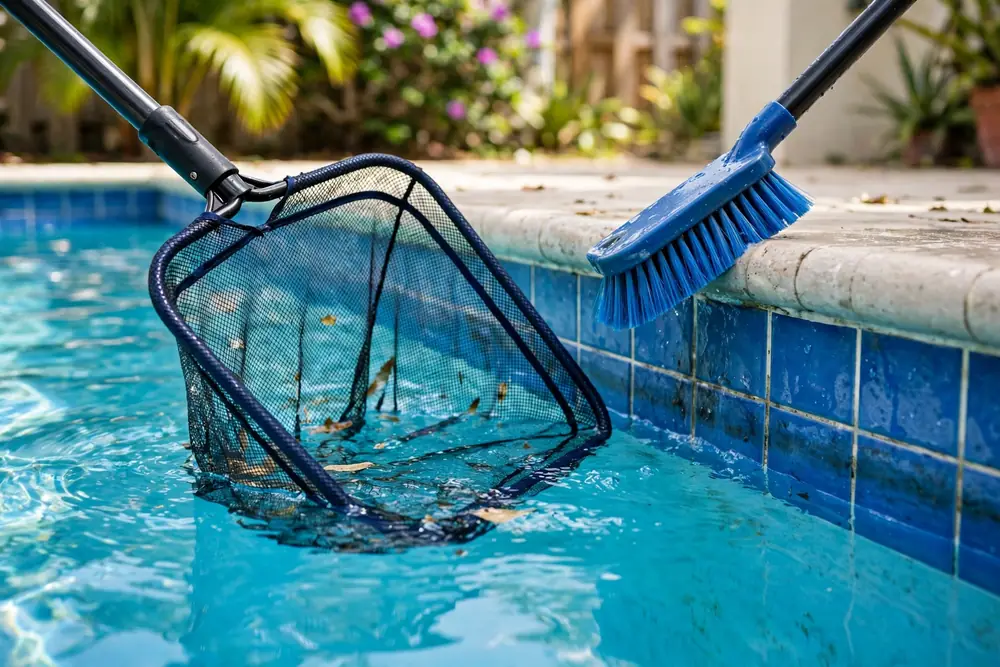
Brushing lifts algae off walls, steps, and corners so filtration can capture the load. Filtration runs long hours while baskets and filter pressure get close attention.
Balance gets checked in stages as clarity returns, floor first and surface last. A follow-up check confirms readings hold after the water clears. Homeowners often ask whether a green pool water causes concern can wait a week. Slow changes in clarity, pressure, or sound usually grow rather than shrink in warm Florida water, and an early call keeps options wider, from a focused fix to a staged plan across a few visits.
Keeping Green Water From Returning
Testing twice a week in summer catches sanitizer dips early. Brushing corners and steps removes the foothold algae needs.
Storm weeks call for basket checks and a quick reading after rain. Trip coverage keeps a pool from sitting still and warm without care. A green pool water causes visit also protects the rest of the pool system. Circulation, filtration, and water balance lean on each other, and a fault in one corner quietly adds strain elsewhere, so a provider checks connected parts rather than a single symptom in isolation during a visit.
Next Steps
Related service pages: green pool cleaning cape coral and pool cleaning cape coral. A caller can ask about either visit type during one call, and cost depends on pool size, equipment and the issue, and a provider will give a quote on the call.
[plc_call_button]