Weekly pool service is a checklist before it is a price. This guide itemizes a complete visit, water, surfaces, filter and equipment, separates the items that ride along from the items that bill separately on most routes, and gives owners the comparison tool that makes competing quotes legible.
Visit content shifts with the calendar, heavier debris and chemistry work in summer, deeper inspection in winter. A plan whose visits never change with the season is a plan described by a brochure rather than a route.
The water work
Every visit starts with the test panel: chlorine, pH and, on a rotating rhythm, alkalinity, stabilizer, calcium and salt. Dosing follows the readings, in correction order. The deliverable is a pool whose chemistry log trends flat across the season, which owners can verify simply by asking to see the readings history at any visit.
The surface work
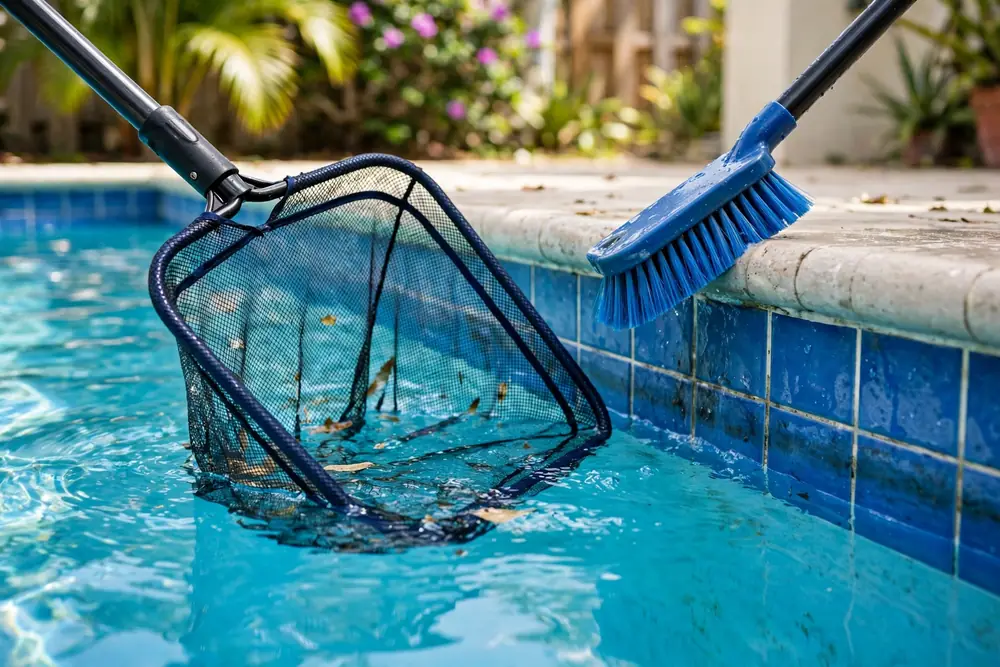
Skimming the surface, emptying skimmer and pump baskets, brushing walls, steps, benches and the waterline, and vacuuming the floor as its condition demands. Brushing is the underestimated item: it is the algae prevention, because colonies disturbed weekly rarely establish. On caged pools the surface work lightens; on open pools under canopy it is the visit’s center of gravity.
The equipment pass
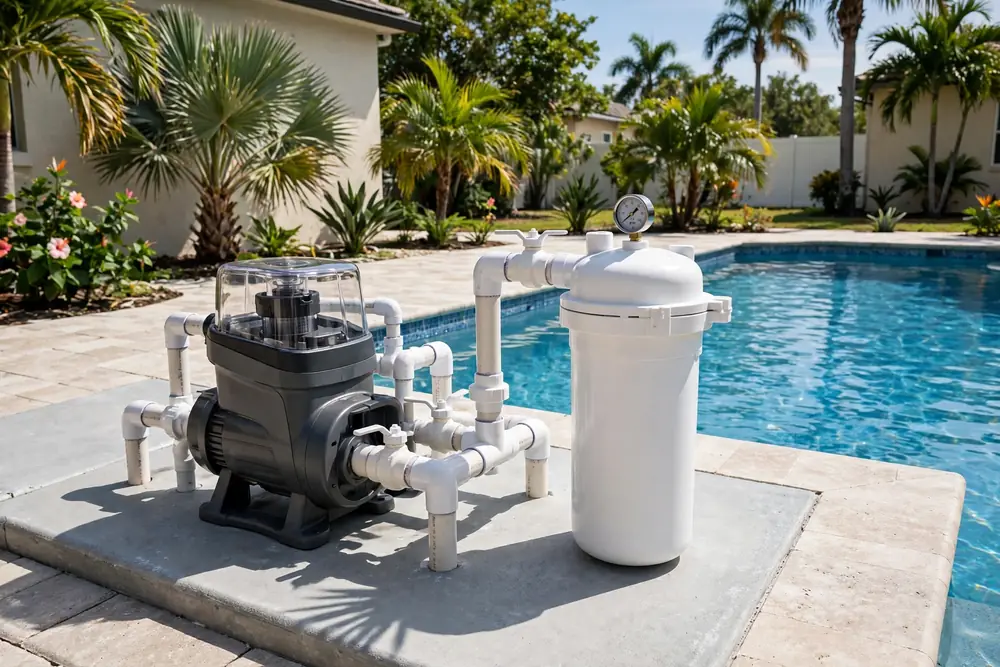
The filter gauge read against baseline, the pump listened to, the cell glanced at on salt systems, the heater and automation checked for codes and complaints, the pad scanned for drips. Most equipment value in weekly service is this pass, because the difference between a seal and a motor is usually one noticed week.
What usually bills separately
Filter deep cleanings beyond the routine rhythm on some routes, salt cell acid cleanings, stain treatments, storm recovery programs, repairs and parts, and any drain-and-refill work. None of this is fine print trickery when it is stated in advance; the hiring questions guide includes the exact questions that surface these terms before the first visit.
- Filter deep cleaning and media replacement
- Salt cell cleaning and replacement
- Stain and scale treatments
- Storm and green pool recovery programs
- All repairs and parts
Reading a Route Report Like an Owner
The modern route leaves evidence: a door hanger, a texted report or an app entry with readings, tasks and photos. Owners who read those reports learn to spot the difference between a thorough route and a chemical splash: readings that vary plausibly week to week, tasks that rotate with the season, and notes that mention equipment before it fails.
A report that never changes is the quiet red flag. Real pools drift, filters load and cells scale; documentation that shows the drift and the response is the service proving itself in writing, week after week.
- Expect readings, tasks and a note, every visit
- Look for equipment observations, not just chemistry
- Question reports that never vary
- Keep reports; they are the pool’s medical record
Questions and Answers
Are chemicals included in weekly service?
Often, for routine balancing, but contracts differ. It is a first-rank question for the call, because chemical-included and chemical-billed plans price differently by design.
Does weekly service include the filter cleaning?
Routine filter attention rides along; deep cleanings and media work vary by provider. The pressure baseline log shows what has actually been done.
How long is a weekly visit?
A maintained residential pool usually takes well under an hour. The visit lengthens honestly with debris load and any fault found on the equipment pass.
What should be left behind after each visit?
A door hanger, text or app note with readings and anything flagged. A route that leaves no trace is asking to be trusted blindly.
Should the owner be home during visits?
No, and most routes run while homes are empty. Gates, pets and access notes are arranged at signup, and the report replaces the doorstep conversation.
What happens on a holiday week?
Routes shift a day and notify. The chemistry tolerance of a healthy pool absorbs the shift, which is one more thing the included buffer is for.
Sources
Last updated: October 23, 2026. Written by the Cape Coral Pool Care editorial team; sourcing and review steps are described on the Editorial Policy page.