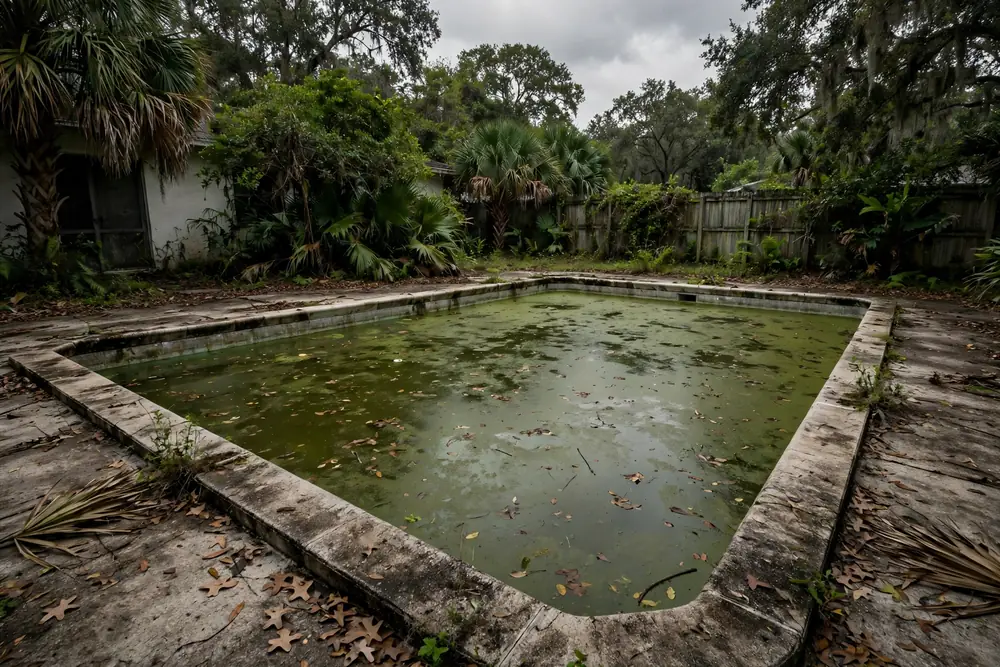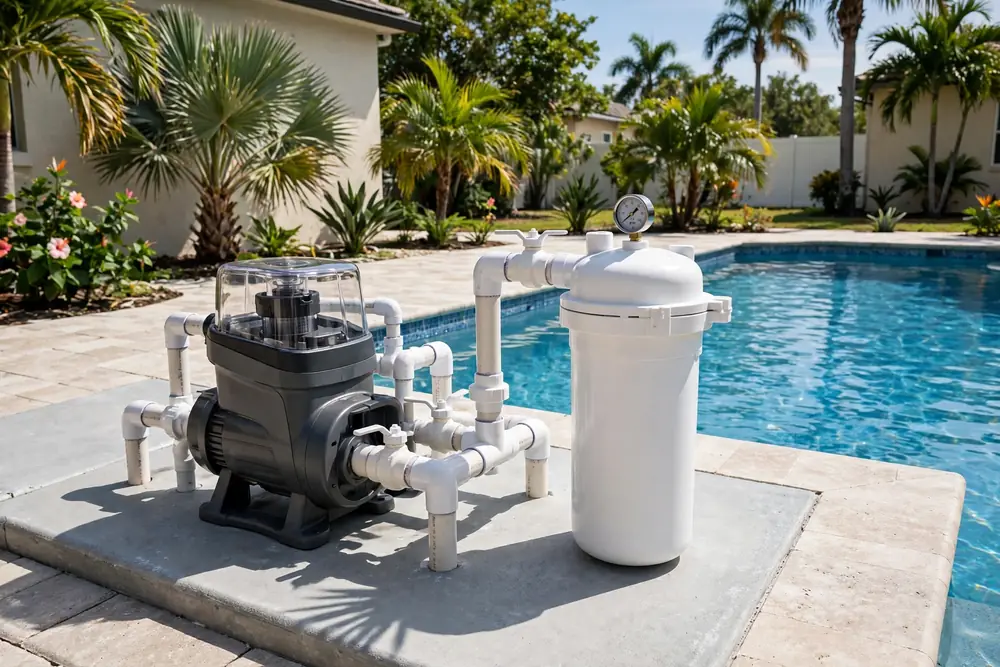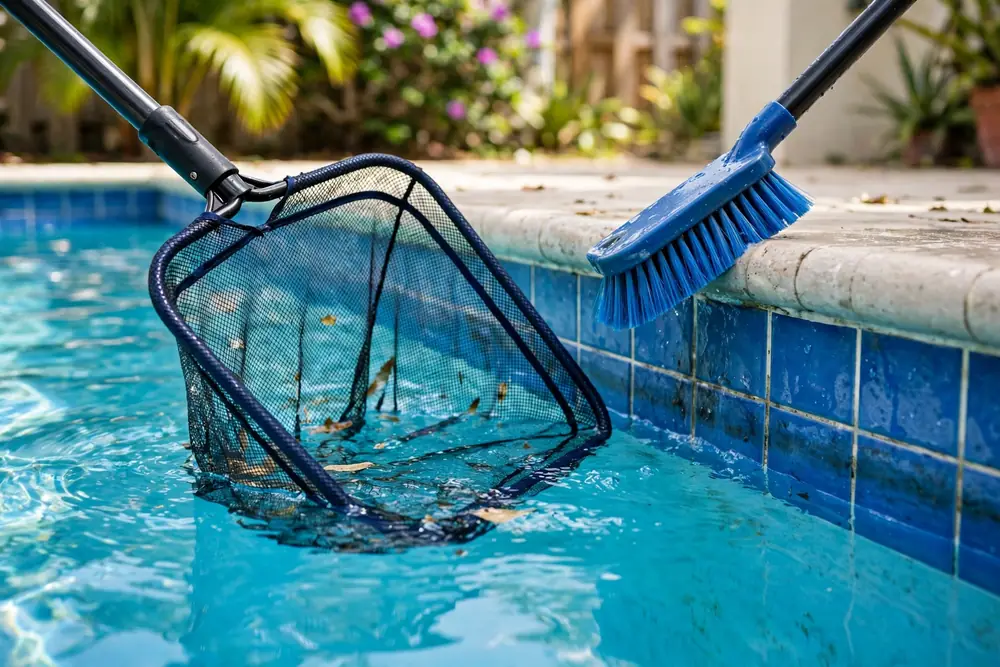
Saltwater and chlorine pools are both chlorine pools; the difference is delivery. A salt system manufactures chlorine on site from dissolved salt, while a traditional setup doses chlorine directly in liquid, tablet or granular form. In Southwest Florida the choice is really about rhythm and hardware: steady automated dosing with cell maintenance, versus hands-on dosing with no generator to feed.
Summer heat raises chlorine demand for both systems, and rainy season dilution tests salt readings and tablet pacing alike. The delivery differs; the season does not care.
How each system actually sanitizes
A salt cell converts salt in the water to chlorine through electrolysis as water passes the plates, dosing continuously while the pump runs. A traditional pool receives chlorine in measured additions, by hand, feeder or liquidator, and the level rises and falls between doses. Both waters should test at the same working chlorine range; swimmers cannot tell them apart by safety, only by feel, since salt water at roughly a tenth of ocean salinity feels softer and is gentler on eyes at the same sanitizer level.
The maintenance rhythms compared
Salt trades weekly chemical handling for periodic hardware care: pH drifts upward as generation runs, cells need seasonal inspection and cleaning in hard local water, and a cell replacement lands every several years. Traditional dosing trades hardware for habits: chlorine purchased, stored and dosed on rhythm, tablets quietly raising stabilizer as they feed, liquid adding nothing but labor. Neither system maintains itself; they bill in different currencies.
Florida-specific factors
Hard fill water loads both systems with calcium, but only the salt system plates it onto expensive cell plates. Lightning country threatens control boards, which only one system has. Storm dilution drops salt and stabilizer together, so salt pools test two extra numbers after big rain. And salt air near canals is indifferent to the debate, corroding whatever metal either system installs, though salt splash-out adds its own corrosion ring around the deck edge.
| Factor | Salt system | Direct chlorine |
|---|---|---|
| Dosing rhythm | Continuous while pump runs | Rises and falls between doses |
| Weekly hands-on task | pH check, cell glance | Chlorine dosing and testing |
| Signature upkeep | Cell inspection and cleaning | Stabilizer watch with tablets |
| Storm response | Test salt and stabilizer | Test chlorine and stabilizer |
Cost shape, without invented numbers
Salt systems cost more to install and to repair at the cell and board, and less in weekly chemical purchases. Traditional systems invert that shape. Which side wins depends on run hours, local water hardness, how the pool is used and how long the cell actually serves in that water, which is exactly why this guide refuses a universal verdict and why a provider quotes conversion or repair from the specific pool’s facts.
Choosing for a Cape Coral pool
Heavy-use family pools and owners who travel favor the salt system’s steady dosing between visits. Owners who prefer simple hardware and full manual control, or whose water already fights calcium hard enough, often stay traditional. Either choice succeeds under a weekly routine and fails without one; the sanitizer delivery method has never been the variable that keeps Florida pools clear. The routine is.
The Hybrid Reality of Florida Salt Pools
A quiet truth of local salt pools: most still use liquid chlorine sometimes, after storms, during recovery and when the cell rests in a cool spell. The systems are not rival religions but delivery methods, and the healthiest salt pools are run by owners who keep a jug of liquid chlorine without embarrassment.
Likewise, tablet pools increasingly use a small in-line feeder or a floater with discipline rather than handfuls tossed in. The mature position in either camp is the same: sanitizer delivered steadily, stabilizer watched, and the calendar, not the marketing, deciding the rhythm.
- Salt owners: keep liquid chlorine for boosts and recovery
- Tablet owners: use a feeder, watch stabilizer monthly
- Both: test weekly, log results, respect the cell or the feeder limits
Questions and Answers
Is saltwater better for skin and eyes?
Most swimmers find salt pool water more comfortable at the same chlorine level, largely because levels stay steadier and chloramine spikes are rarer. The chlorine itself is identical.
Can a chlorine pool convert to salt?
Usually yes: a generator, cell plumbing and a salt dose convert most pools in a day of equipment work. The heater, light niches and older metal parts deserve a corrosion review first.
Does a salt pool still need shock?
Sometimes, after storms, heavy loads or a green episode. The cell maintains; supplemental chlorine rescues. Owners who accept that own happier salt pools.
Which system do service routes prefer?
Routes service both all day. Salt pools shift visit time from dosing to cell and pH care; traditional pools shift it back. The weekly cadence stays the same.
Which system do local providers see fewer problems with?
The maintained one. Service routes see neglected pools of both types and healthy pools of both types; the sanitizer brand is rarely the variable that separates them.
Can a pool switch systems mid-season?
Yes, conversion is a defined project in either direction. Water chemistry carries over, so the switch is planned around stabilizer level and existing equipment rather than the calendar.
Sources
- CDC Healthy Swimming guidance on pool water quality
- University of Florida IFAS Extension publications
Last updated: October 23, 2026. Written by the Cape Coral Pool Care editorial team; sourcing and review steps are described on the Editorial Policy page.