Post-storm pool recovery is a sequence, and the order is the value. Safety and inspection, bulk debris, filtration, sediment, chemistry, verification: each stage makes the next one possible, and skipping ahead wastes chemicals on leaves and burns filter capacity on silt. This guide gives the homeowner version of the sequence and marks the points where the load usually turns professional.
Recovery season overlaps peak heat, which shortens every timeline: algae moves in days, so the sequence starts the first safe morning after the storm, not the first convenient weekend.
Stage one: safety and the honest look
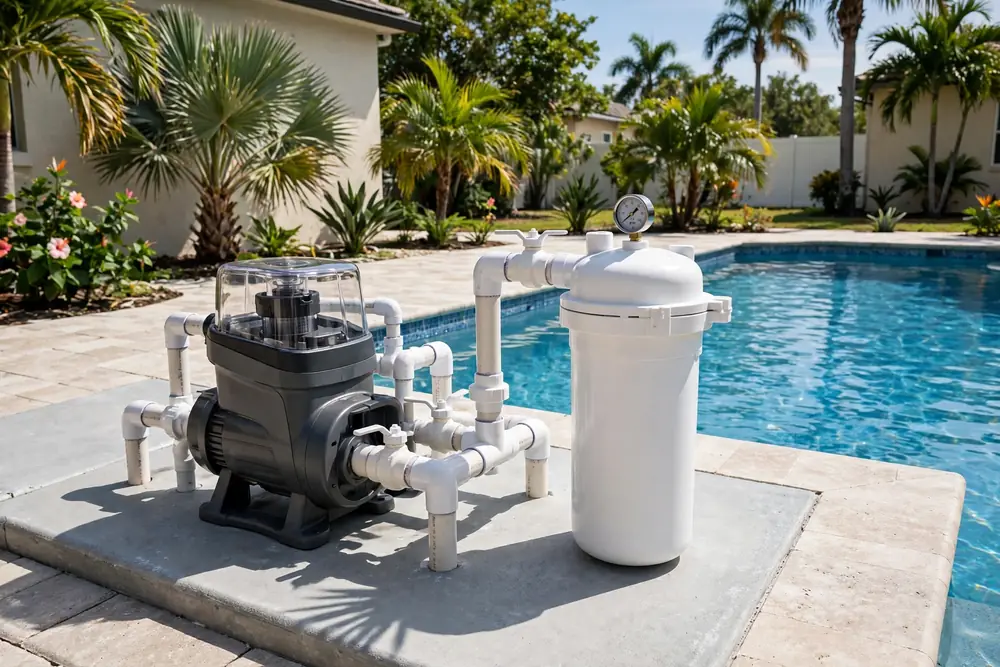
Before any switch is touched: check for downed lines anywhere near the property and follow utility guidance, inspect the equipment pad for flooding and damage, and walk the pool for glass, metal and cage debris. Photograph damage before moving it, for records. A breaker that was off for the storm stays off until the pad is dry and sound; motors and boards that sat in water need assessment, not a test run.
Stage two: bulk debris, by hand
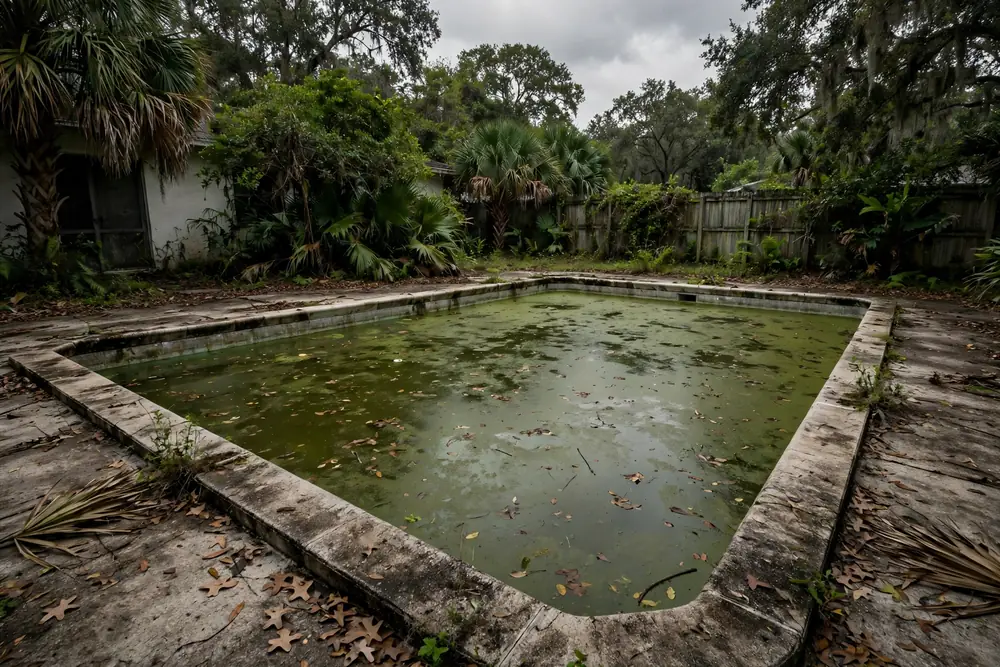
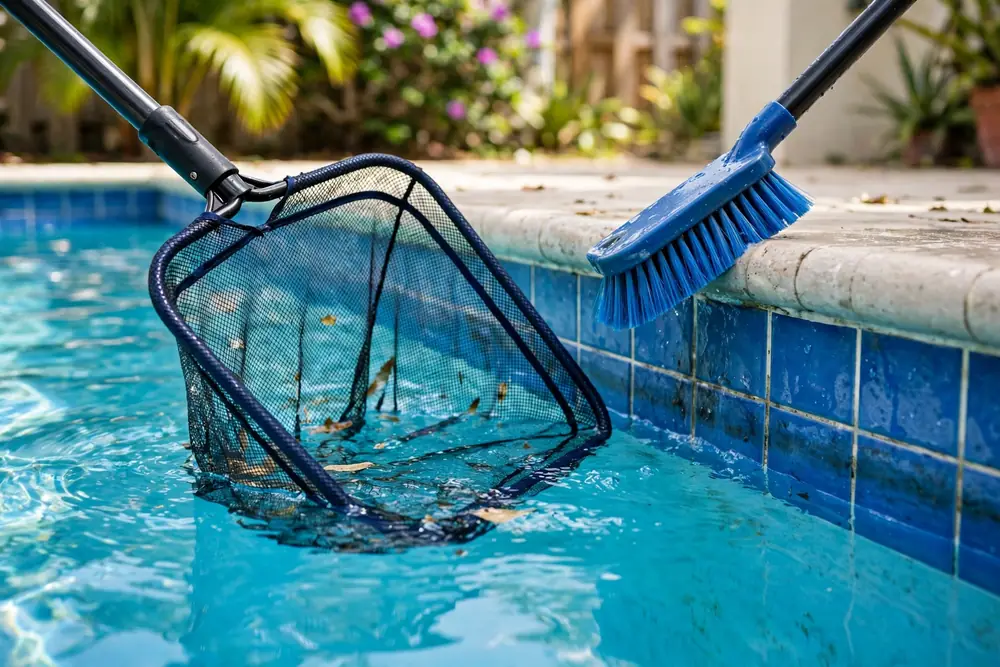
Branches, furniture, screen pieces and large debris come out by net and hand, never by the automatic cleaner and rarely by the vacuum, because big loads damage both. Baskets get emptied repeatedly during this stage. The goal is a pool whose remaining problem is in the water, not in it, because everything after this stage assumes circulation can run without obstruction.
Stage three: filtration and sediment
Start circulation, clean the filter, and expect to clean it again. Sediment comes off the floor in stages: a first vacuum pass, a settling pause, a second pass, with heavy loads vacuumed to waste where the system allows. Pressure readings referee the pace; a filter climbing ten pounds in an hour is asking for a cleaning cycle, not more patience.
Stage four: chemistry rebuild
With debris out and filtration running, run the full panel. Storm water arrives diluted in everything: sanitizer, stabilizer, salt on salt systems, and often skewed in pH. Correct in order, dose in rounds with brushing between, and extend run hours while the rebuild proceeds. Green water at this stage joins the green pool recovery discipline rather than a one-night shock and hope.
- Test the full panel before dosing
- Correct alkalinity, then pH, then sanitizer
- Rebuild stabilizer and salt after dilution is measured
- Brush between dosing rounds
Stage five: verification and the watch week
Recovery is proven, not declared: water clear to the main drain, chlorine holding overnight at normal levels, pressure at baseline, and a filter that stays clean for days instead of hours. The following week deserves two extra checks, because late algae from storm nutrients is the classic relapse pattern. If the pool relapses twice, the finding is upstream, drainage, filter condition or a sanitizer system fault, and the storm cleanup service exists for that scale of problem.
Knowing When Recovery Becomes a Professional Job
Most storm recovery is labor and sequence, which patient owners handle well. The professional line is crossed by specific events: flooding that reached the equipment pad, any electrical trip or damage, water contaminated by sewage or chemicals, structural questions like a lifted surface or cracked deck, and green water that ignores a week of correct treatment.
Crossing that line early is cheaper than crossing it late. A pad that took floodwater and gets energized anyway can lose a motor or a board to a problem a single inspection would have caught dry.
- Flooding reached the pad: inspection before power
- Repeated breaker trips: stop and call
- Sewage or chemical spill suspected: treat as contaminated
- Structural movement or cracking: document, then call
Questions and Answers
How long does post-storm recovery usually take?
A screened pool after a thunderstorm: two to four days. An open pool after a hurricane with power loss: a week or more of staged work. Debris volume and flooding set the calendar.
Can chemicals go in before debris is out?
They can, and most of the dose will be spent on the debris. The sequence exists because order saves both chemicals and days.
What if the pool flooded with yard water?
Flooding adds soil bacteria and unknown contaminants. Treatment is more conservative, verification stricter, and badly flooded pools are good candidates for professional recovery.
Should the cage be repaired before the pool?
Temporary closure of big openings speeds recovery by stopping new debris. Full cage repair follows its own contractor timeline; the pool need not wait for it.
How long until the pool is swimmable again?
When chemistry tests in range on a full panel, clarity allows the main drain to be seen, and sanitation has held through a full day of circulation. Days for light storms, a week or more for heavy ones.
Does insurance care about pool recovery steps?
Documentation helps any claim: date-stamped photos before cleanup, saved receipts and a note of equipment condition. Take the photos first, then start work.
Sources
- Ready.gov hurricane preparation guidance
- National Weather Service hurricane preparedness
- Florida Department of Health, Swimming Pools program
Last updated: October 23, 2026. Written by the Cape Coral Pool Care editorial team; sourcing and review steps are described on the Editorial Policy page.