Overview
Questions about pool leak warning signs come up often in Cape Coral and across Southwest Florida, where heat, rain, and long swim seasons shape pool care. This guide walks through signs, causes, and practical steps in plain language, with notes on when a provider visit makes sense for a specific pool.
Evaporation Versus a Real Leak
Southwest Florida sun and wind pull visible water off a pool during dry weeks. A bucket set on a step shares the same weather and gives a fair comparison over a day.
Matching loss between bucket and pool points toward weather, while a gap points toward a leak. Level notes across several days beat a single worried look. A pool leak warning signs visit also protects the rest of the pool system. Circulation, filtration, and water balance lean on each other, and a fault in one corner quietly adds strain elsewhere, so a provider checks connected parts rather than a single symptom in isolation during a visit.
Signs Around the Equipment Pad
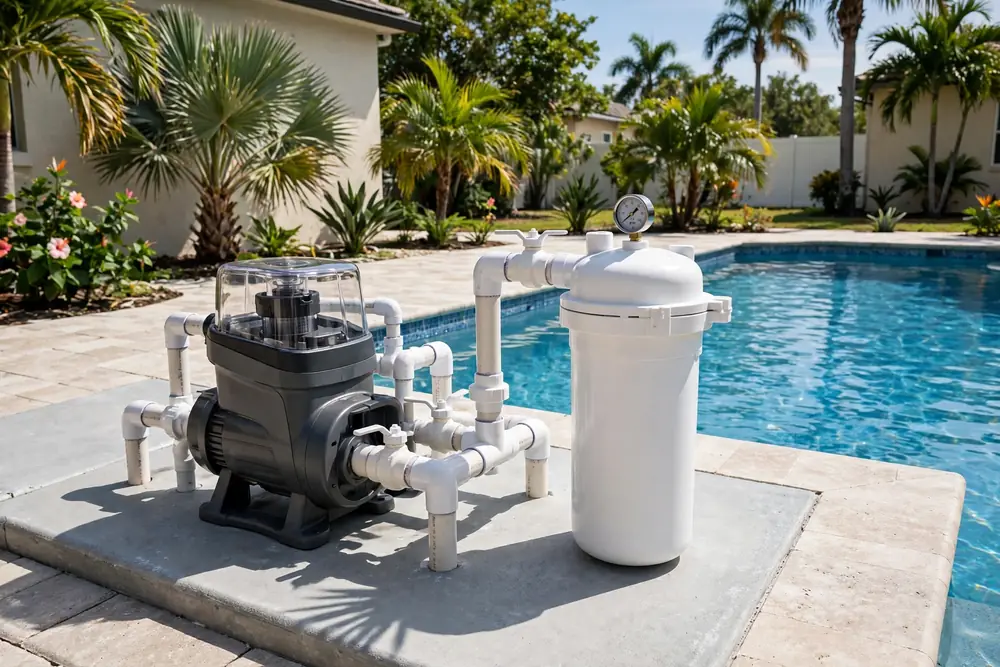
Damp soil, puddles, or green patches near the pad can signal a fitting or union drip. Air in the pump basket during cycles hints at a suction side entry point.
Corrosion or mineral crust at a joint shows a slow weep history. Pad photos across a week reveal whether a damp area grows. Clear notes help every pool leak warning signs visit in Cape Coral. Water color, recent weather, equipment sounds, and the date of the last filter cleaning each point toward a likely cause, and a short list shared during a call lets a provider plan checks, parts, and timing before arriving at the pool.
Cape Coral heat raises water temperature for long stretches of the year, and warm water uses sanitizer faster than cool water. A pool that looks clear on Monday can turn dull by Friday after heavy swim use, a storm, or a missed brushing cycle along walls and steps.
Summer rain adds fresh water, leaf matter, and roof runoff to many Cape Coral pools, and each storm can shift balance readings for days. Checking water soon after rain, clearing baskets, and watching filter pressure helps a small change stay small instead of growing into a bigger visit.
Screened enclosures around many Southwest Florida pools cut leaf load but still collect fine dust, pollen, and insects along the waterline. Tile lines, steps, and corners collect buildup first, and regular attention to those spots keeps the rest of a cleaning or repair visit focused.
Canal-front homes in Cape Coral often face extra wind-blown debris and salt air near pool equipment pads. Metal fittings, pump housings, and heater parts age faster in salty air, so a provider visit often includes a quick look at the pad even when the call starts with water clarity.
Hurricane season planning matters for every pool in Southwest Florida, from water level choices before a storm to debris removal after wind passes. Notes about equipment age, prior repairs, and storm exposure help a provider plan a visit with the right parts and a realistic schedule.
Salt systems remain popular across Cape Coral, and salt cells need periodic inspection for scale buildup as water temperature and run time change. A cell with heavy scale produces less sanitizer, and water can slide toward green even when the salt reading looks normal at a glance.
Signs Inside and Around the Pool
Level loss that continues with the pump off shifts suspicion toward shell, light, or skimmer areas. Dye checks at fittings and skimmer throats belong to a detection visit toolkit.
Loose tiles, cracks, or gaps at the skimmer opening deserve a close look. Deck pavers that stay damp without rain add another clue to the list. Homeowners often ask whether a pool leak warning signs concern can wait a week. Slow changes in clarity, pressure, or sound usually grow rather than shrink in warm Florida water, and an early call keeps options wider, from a focused fix to a staged plan across a few visits.
- Pump basket air
- Damp pad soil
- Fast chemical use
- Level drop with pump off
- Mineral crust at joints
What a Detection Visit Covers
Detection follows an order: evaporation comparison, pad check, then pressure and fitting checks. Findings separate a quick union fix from a buried line concern.
A provider explains location, scope, and repair paths in plain terms. Early detection limits water loss and chemical waste across a season. A pool leak warning signs visit also protects the rest of the pool system. Circulation, filtration, and water balance lean on each other, and a fault in one corner quietly adds strain elsewhere, so a provider checks connected parts rather than a single symptom in isolation during a visit.
When to Call Without Waiting
A sudden jump in loss rate deserves a prompt call. Pump prime problems plus level loss together raise the priority.
Wet ground that spreads or a sink spot near plumbing lines also raises urgency. A short call with level notes gives a provider a strong starting point. Clear notes help every pool leak warning signs visit in Cape Coral. Water color, recent weather, equipment sounds, and the date of the last filter cleaning each point toward a likely cause, and a short list shared during a call lets a provider plan checks, parts, and timing before arriving at the pool.
Next Steps
Related service pages: pool leak detection cape coral and pool repair cape coral. A caller can ask about either visit type during one call, and cost depends on pool size, equipment and the issue, and a provider will give a quote on the call.
[plc_call_button]