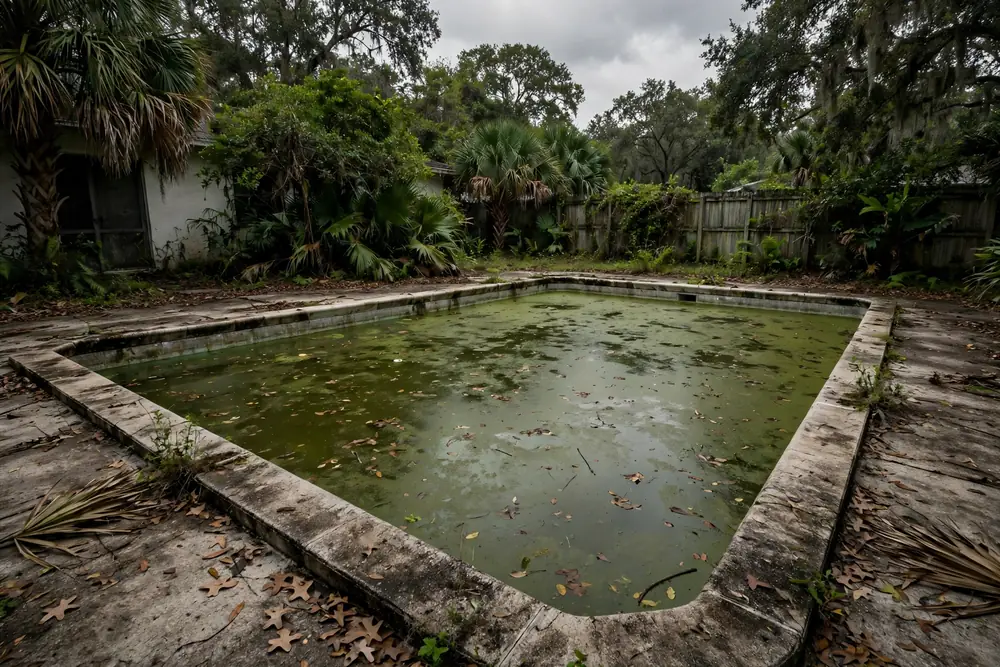
Preparing a pool for a hurricane is the smallest part of preparing a home, and this checklist keeps it in its place: people, house and official guidance first, pool steps in the calm days before landfall. A prepared pool survives the storm with its equipment intact and recovers in days; an unprepared one adds debris excavation and electrical faults to a hard week.
Hurricane season runs June 1 to November 30, with the local peak in August and September. One preparation routine, rehearsed yearly in May, serves the whole season.
Before anything else: the order of priorities
Follow official Lee County and National Weather Service guidance for the household: evacuation decisions, shutters, supplies and documents outrank every item below. Pool preparation belongs in the same window as securing yard furniture, typically two to three days before expected landfall, and stops the moment conditions begin to arrive. Nothing in this checklist justifies being outside in deteriorating weather.
Water and chemistry steps
Balance the water a few days out, then add a shock dose the day before expected arrival so the pool carries a sanitizer reserve into the power-loss window. Do not drain the pool: water weight holds the shell against a rising water table, and an empty Florida pool in saturated ground can shift or pop. Lowering the level a small amount for overflow management follows the pool builder’s guidance, not folklore, and many owners simply let the overflow drain do its work.
- Balance alkalinity and pH first
- Shock the day before arrival
- Do not drain the pool
- Remove the automatic cleaner from the water
Equipment and electrical steps
Photograph the pool, cage and equipment pad for records. Turn off power to pool equipment at the breaker before the storm arrives, especially where flooding of the pad is possible, and leave it off until the pad is inspected dry after the storm. Secure or store the cleaner, toys and anything that can become a projectile or a debris load, and trim the obviously dead fronds and branches overhanging the water if time and safety allow.
The screen enclosure question
Owners debate opening or removing screen panels to save the cage frame in extreme wind. Practice varies and wind rating decides; this guide takes no position beyond noting that the enclosure manufacturer’s guidance and local experience govern, and that a cage decision is a property decision to make in the calm season, not during a watch. What is certain: after the storm, torn panels let debris in until repaired, and recovery timelines should assume it.
After the storm: the first 48 hours
Safety and inspection come before circulation: breakers, pad flooding, glass or debris in the water, cage damage. Then the recovery sequence from the after-storm guide applies, debris by hand, filtration restart, staged sediment and chemistry work. The storm cleanup service page describes the professional version of the same sequence for pools where the load is beyond a weekend.
What Neighbors Get Wrong Every Season
The recurring local mistakes are consistent: draining the pool ‘to be safe’, which risks the shell in saturated ground; covering the pool, which turns the cover into a debris net that tears; and staging chemicals inside the house in unmarked containers. Each error comes from a reasonable instinct applied to the wrong physics.
The checklist in this guide exists because preparation happens under time pressure, when instincts outrun reading. Printed and kept with the storm supplies, it converts those instincts into a sequence that has already been thought through in calm weather.
- Never drain before a storm
- No covers: let debris land in open water
- Chemicals stored dry, labeled and elevated
- Loose objects secured first, pool tasks second
Questions and Answers
Should a pool be drained before a hurricane?
No. A full pool’s weight protects the shell against groundwater pressure in saturated soil. Draining is one of the most damaging myths in Florida pool care.
Should the pump run during the storm?
Power to equipment should be off at the breaker for the storm’s passage where flooding or surges are possible. Circulation resumes after the pad passes a dry inspection.
Is it safe to swim right after a storm passes?
Not until debris is out, the water is sanitized and balanced, and any electrical concerns at the pad are cleared. Storm water is not pool water yet.
Does homeowners insurance cover pool storm damage?
Policies vary widely on cages, equipment and surface damage. Photographs taken before the storm are the practical step every owner controls.
When should preparation start?
When a storm enters the forecast cone for the region, not when landfall is certain. The calm hours before outer bands arrive are the working window, and supplies sell out early.
Is pool preparation worth it for a rental property?
Yes, and the away-home guide covers assigning the task: a named local person with the checklist beats a worried phone call from another state every time.
Sources
Last updated: October 23, 2026. Written by the Cape Coral Pool Care editorial team; sourcing and review steps are described on the Editorial Policy page.