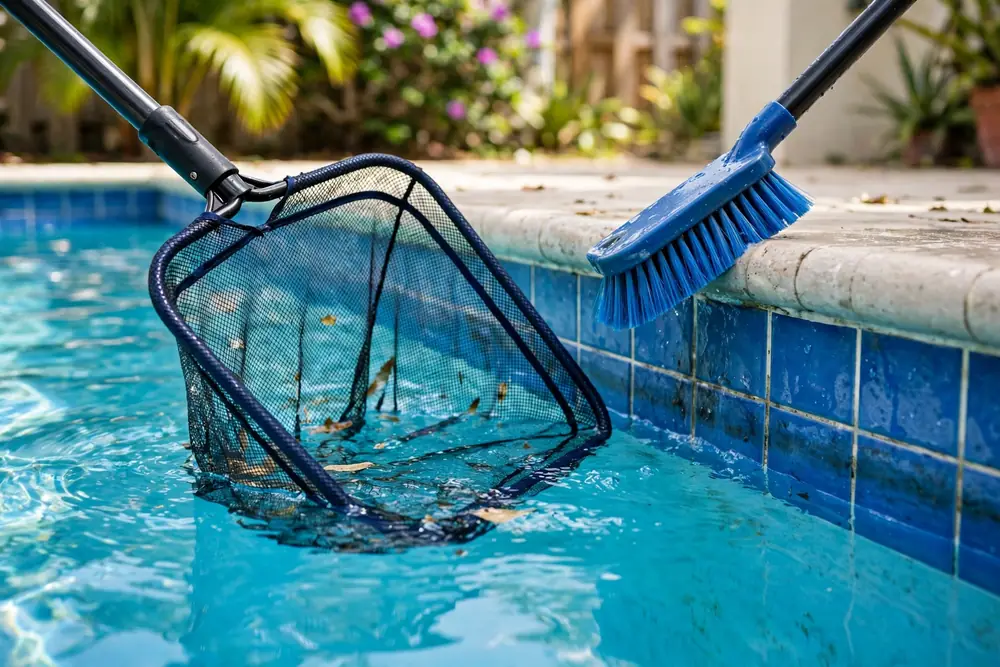
A Florida pool wants attention weekly, and in summer it wants it without exception. The answer follows from arithmetic rather than habit: sanitizer is consumed daily by sun and swimmers, storms reset chemistry weekly, and algae doubles on a schedule measured in warm days. This guide breaks the weekly rhythm into its parts, shows which tasks ride which cadence, and explains the seasons when even weekly care needs a mid-week assist.
Seasonal timing in Southwest Florida shifts the rhythm’s weight rather than its existence: summer demands pre-storm checks and faster responses, winter relaxes debris pressure but rewards a monthly deep inspection while the pace is slow.
The short answer: weekly, all year
Florida pools never get a winter off. Water stays warm enough for algae through most of the year, and the swim season effectively runs twelve months in Cape Coral, so the national advice built around opening and closing a pool does not apply. A weekly visit that tests and balances water, brushes surfaces and empties baskets matches the speed at which Florida chemistry and debris actually move.
Monthly care fails quietly. Chlorine and pH drift out of range inside two weeks in summer, stabilizer and calcium drift inside a season, and a filter loads past its ten-pound pressure trigger without announcing itself in the water until clarity is already lost. Weekly is not a sales rhythm; it is the interval at which small corrections stay small.
- Test and balance water: weekly, twice weekly in peak summer for home routines
- Brush walls, steps and waterline: weekly
- Skim and empty baskets: weekly, plus after every major storm
- Vacuum: as the floor demands, usually weekly in debris season
- Filter cleaning: on pressure, typically every four to twelve weeks
What weekly actually covers
A real weekly visit is a system pass, not a skim. Water gets a full test and dose, surfaces get brushed where algae starts, baskets get emptied so the pump breathes, and the equipment gets eyes on it while running. That last habit, watching the pad work, is how seal drips, capacitor hums and cell errors get caught in the cheap week rather than the expensive one.
Homeowners covering the routine personally should copy the structure, not just the frequency. The order matters: debris out first, then brushing, then testing, because dosing water that is about to receive a wall of brushed algae wastes the dose.
When weekly is not enough
Peak summer stacks the deck: daily thunderstorms dilute chemistry, heat pushes chlorine demand, and swim loads climb. Pools under heavy canopy, pools hosting frequent gatherings and pools recovering from a green episode often add a mid-week chemical check through the worst months. The pool announces the need clearly, chlorine that will not hold to the next visit is the announcement.
Post-storm care is its own cadence. A storm response, skim, brush, test and dose inside the first dry day, prevents the dilution-to-algae pipeline that fills cleanup schedules every August in Southwest Florida.
The seasonal calendar for Southwest Florida
Spring asks for a filter deep clean, a salt cell inspection and a stabilizer check before demand climbs. Summer is the weekly grind plus storm responses. Autumn is equipment season: heater test run, cell condition review, a calcium reading. Winter, mild as it is, still wants weekly chemistry with slightly longer forgiveness, and it is the honest season to schedule repairs before the spring rush.
Tasks that run on their own clocks
Not everything is weekly, and forcing it wastes effort. Filter cleaning follows pressure, salt cell cleaning follows visible scale, and stains follow identification. The weekly visit is the inspection rhythm that reads those separate clocks, which is the actual product being bought: judgment applied on schedule.
- Write the clean filter pressure on the tank and compare weekly
- Open the salt cell seasonally, clean only when scale shows
- Log calcium and stabilizer a few times a year, not weekly
Building the Weekly Rhythm Into the Household Calendar
The owners who keep Florida pools longest without drama share a scheduling trick: care tasks anchor to existing weekly events rather than floating loose. The test kit lives where the Saturday coffee happens, the basket check pairs with trash day, and chemistry adjustments land on the same weekday so the last dose is always a known age when results look odd.
Anchor days also protect the pool during life’s busy stretches. A rhythm tied to the calendar survives a work trip or a houseful of guests because the task is expected, and a missed anchor is noticed the same week instead of at the next green tinge.
- Pick one anchor weekday for testing and dosing
- Pair basket and skimmer checks with an existing outdoor chore
- Log results in the same notebook or phone note every time
- Review the log monthly for drift, not just for failures
Questions and Answers
Can a Florida pool go two weeks between cleanings in winter?
Winter forgives more, but chemistry still drifts and debris still loads. Most Cape Coral pools stay on weekly service year-round; a proven, lightly used winter pool is the only honest candidate for a longer gap, and even then testing should stay weekly.
Does a screened pool need less frequent cleaning?
A cage cuts debris sharply, so vacuuming lightens, but chemistry moves at the same speed. The visit gets shorter, not rarer.
What happens after a month without cleaning?
Expect cloudy or green water, a loaded filter, possible staining and a recovery program instead of a routine visit. The month was not saved; it was borrowed at cleanup rates.
Is a robot cleaner a substitute for weekly service?
Robots handle floor debris well and earn their place, but they do not test water, brush waterlines, clean filters or read equipment. They join a routine; they do not replace it.
What is the single highest-value habit?
Testing on schedule and writing the result down. The log turns arguments about how the pool looked last month into data, and data catches drift while corrections are still small.
Does an automatic cleaner change the schedule?
It removes the vacuuming line, not the rhythm: baskets, chemistry, filter watch and brushing still run weekly, because the cleaner’s own filter becomes one more thing that loads with debris.
Sources
- CDC Healthy Swimming guidance on pool water quality
- Florida Department of Health, Swimming Pools program
Last updated: October 23, 2026. Written by the Cape Coral Pool Care editorial team; sourcing and review steps are described on the Editorial Policy page.