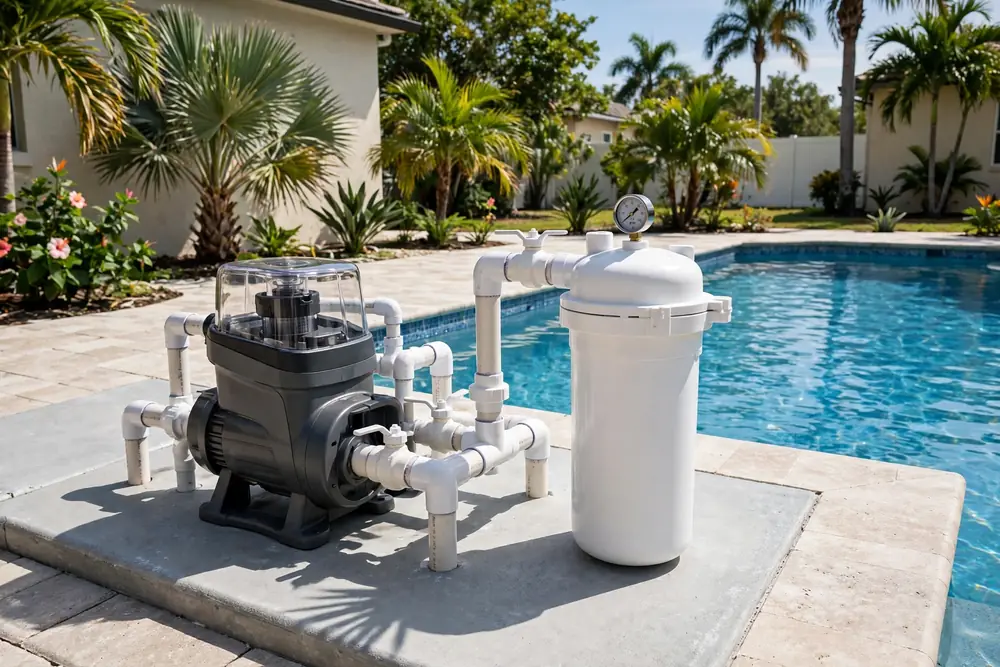
Pool repair pricing looks arbitrary from outside and is actually layered: diagnosis, the failed component’s tier, brand ecosystem pricing, access labor and whether the repair restores a young system or extends an old one. This guide maps the layers system by system, pumps, filters, heaters, salt systems, lights, automation and leaks, so a spoken quote on a call can be judged on its structure instead of its surprise.
Storm season compresses repair capacity across the region, which is when staged diagnosis protects owners most: the named fault lets a repair wait safely or proceed urgently on evidence rather than on queue pressure.
The layer model
Every repair quote is diagnosis plus parts tier plus labor access plus the age question. Diagnosis is real work and sometimes a separate line; parts tiers are consistent enough across the trade to learn; access labor swings with pad layout; and the age question, repair this system or replace it, is where honest providers earn trust by arguing both sides with numbers attached.
| Layer | What it covers | What moves it |
|---|---|---|
| Diagnosis | Testing that names the failed part | System complexity, access |
| Parts | The component tier | Brand ecosystem, capacity |
| Labor | Time on site | Pad access, job staging |
| Age decision | Repair vs replace judgment | System age, running cost |
Pumps and filters
Pump repairs step from capacitors, seals and O-rings, to motors, to full variable-speed replacements, each step roughly a different order of commitment. Filter repairs step from gauges and seals, to element and grid sets, to tanks. Both reward early calls: the seal fixed in week one is the smallest line in this entire guide.
Heaters and salt systems
Heater pricing follows the failed system inside the box, sensors and switches low, boards and fans mid, compressors and exchangers at equipment level, with licensed gas work added on gas units. Salt systems mirror the shape: switches and sensors low, cells mid-to-upper by capacity, full control units at the top. In both, the brand and model spoken on the first call tighten the quote more than any negotiation.
Leaks and automation
Leak work separates detection from repair on purpose: detection is a staged diagnostic service, repair is whatever the proven location demands, from a pad seal to a line under pavers. Automation prices by the failed link in the chain, sensors and actuators low, boards and panels high, with surge history as the local multiplier every Cape Coral owner understands by their second summer.
The Second-Opinion Situation
Some quotes deserve a second professional look, and the layer model shows which: any figure that replaces major equipment on a first visit without documented diagnosis, any total that arrives before the failing part is named, and any recommendation whose urgency cannot be explained in terms of damage spreading.
A second opinion costs a diagnostic visit and buys the most valuable thing in repair: a named fault. With the fault named, quotes become comparable, the repair-versus-replace debate becomes arithmetic, and the owner stops paying for uncertainty.
- Unnamed fault plus major replacement: get a second diagnosis
- Compare quotes only on the same named repair
- Urgency should be explainable as damage spreading
- Documentation travels with the pool’s records
Questions and Answers
Why do quotes for the same repair vary?
Because the layers vary: diagnosis depth, genuine versus pattern parts, access labor and warranty terms. Ask each provider to name the layer amounts; the comparison usually explains itself.
Is a diagnostic fee normal?
Yes, on most professional routes. Detection and diagnosis are skilled work with instruments, and many providers credit the fee toward the repair when they perform it.
When does replacement beat repair on price alone?
When the repair approaches a large share of replacement cost on a system already at expected life, especially where the replacement also cuts running cost, as variable-speed pumps do. The provider should show both figures.
Can a quote be given over the phone?
A range-shaped expectation, yes, once brand, model and symptoms are known. A firm figure follows diagnosis, which is the honest order the repair pages in this library all describe.
Is asking for the failed part back reasonable?
Yes, and good providers expect it. The removed part is evidence of the fault and the repair, and keeping it costs the provider nothing.
Do written quotes protect the owner?
A written scope, parts named, labor stated and exclusions listed, converts a conversation into a commitment. Verbal totals drift; written ones can be compared and held.
Sources
Last updated: October 23, 2026. Written by the Cape Coral Pool Care editorial team; sourcing and review steps are described on the Editorial Policy page.